Planning guide
How to Plan a Bali Wedding
The whole journey in one place, from where to start to the day itself, with the deep guide for every step. And a planner to hand it to, if you would rather not carry it yourself.
By Sekar Updated June 2026 14 min read
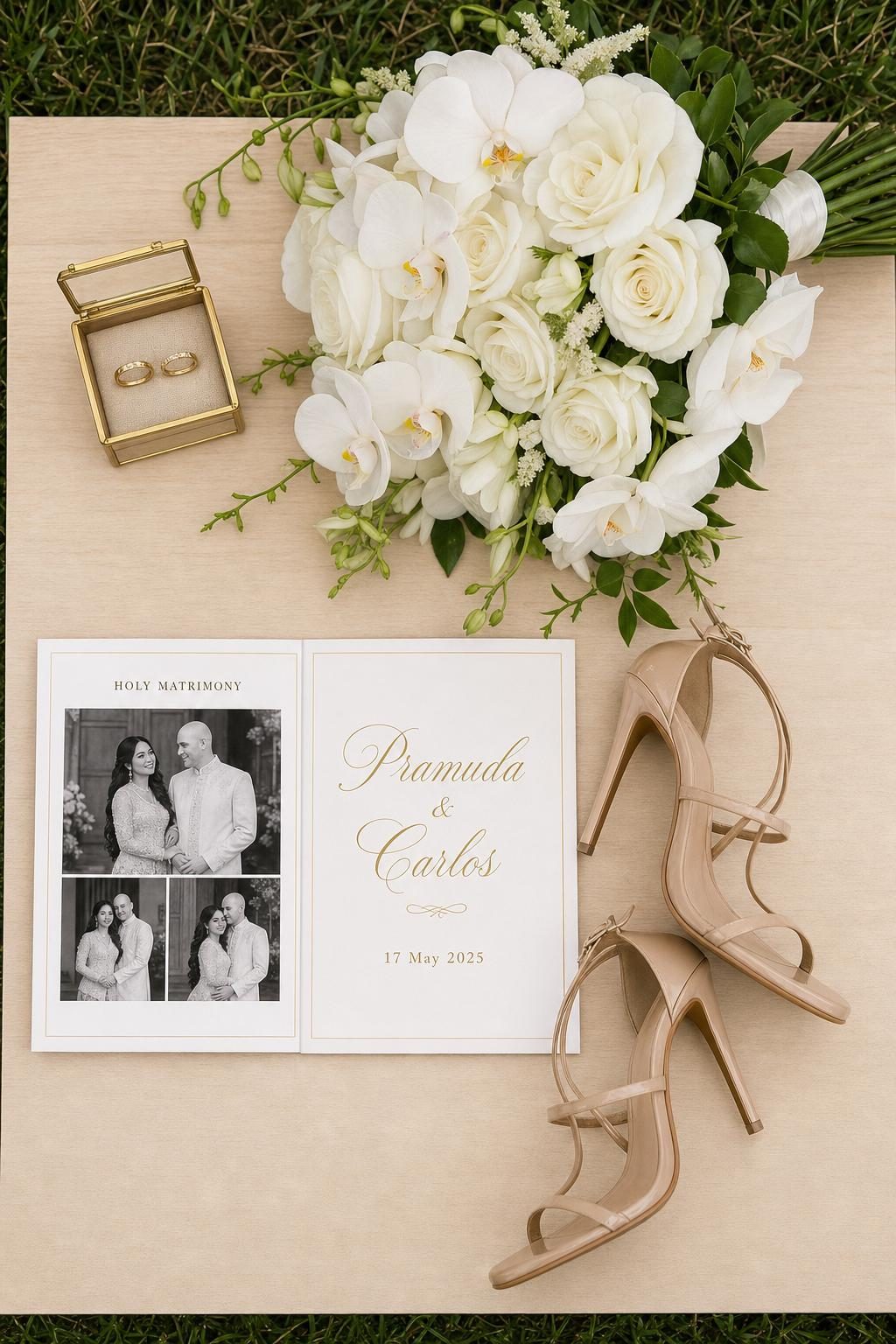
First, congratulations. Choosing to get married in Bali is a lovely decision, and you have made it. Whatever brought you here, a clifftop you saw in a photo, a quiet promise on a trip years ago, the simple wish to marry somewhere that feels like a held breath, you have picked one of the most beautiful places in the world to say yes. That deserves a moment before the planning begins.
This guide is our gift to you, and it comes with no strings. Whether you ever send us a message or not, you should walk away from this page knowing how to plan a Bali wedding from start to finish. We will not bury the useful parts behind a form. The whole journey is here: where to begin, what it costs, when to go, where to marry, the legal question that worries everyone, your vendors, your guests, what to wear, the timeline, and how to do it all from the other side of the world. When a topic runs deep, we will point you to the guide that covers it properly, so this page stays a map you can hold in one hand.
And the one idea that makes all of it calm: a Bali wedding is a project, and this guide walks the project in order.
It is a project, not a to-do list
A long to-do list is frightening because everything on it shouts at once. A project is calmer, because a project has an order. That single reframe is the most useful thing we can hand you.
Here is the shape of it. Your date and your guest count drive your budget. Your budget and your season drive your venue. Your venue drives your vendors. Each decision unlocks the next, which means you never have to solve everything at the same time. You only have to solve the next thing. When you feel the panic rising, it is almost always because you have skipped ahead to a decision that depends on one you have not made yet. Step back to the earlier lock, settle it, and the path forward reappears.
Every project also needs one person who owns the timeline. Someone who knows what should happen this month, who is chasing the florist, who notices that the catering numbers no longer match the guest list. That person can be you. It can also be a planner. Naming that role now matters, because the question of who carries it quietly shapes the rest of your planning. Hold that thought. We will come back to it once you have seen what the project actually involves.
Start here: the first decisions
If you only do one thing after reading this page, make these first few decisions. They are the locks that everything else hangs from, and once they are down, the overwhelm fades fast.
- Your vision, the feeling more than the detail. Barefoot on sand at sunset, or candlelit in a jungle villa? Twenty people or two hundred? You do not need the colour palette yet. You need the mood.
- Who is involved. A guest list changes everything about scale and logistics. If it is just the two of you, that is a different and wonderfully simple path, an elopement for just the two of you, with almost none of the planning weight.
- A date, or a short window of possible dates. Even a rough month gives the rest of the project something to anchor to.
- A rough guest count. This shapes your venue, your catering and your budget more than any other single number.
- A working budget. Not a precise figure, just a range you are comfortable with. It quietly decides what is realistic everywhere else.
That is genuinely the hard part of starting. From here, the project moves in a sensible order, and we keep a month-by-month checklist for when you want the full sequence laid out.
What a Bali wedding costs
This is usually the first real worry, so let us be honest about it. There is no single price for a Bali wedding, and any page that hands you a tidy number is guessing. The cost follows your choices, and a handful of decisions move it more than the rest.
- Guest count. Every extra person adds catering, seating and often accommodation. This is the biggest lever you hold.
- Season. Peak dry-season dates cost more than quiet shoulder months.
- Venue type. A private clifftop estate and a relaxed beach club sit at very different points.
- Your vendors. Photography, florals, catering and entertainment each scale with how elaborate you go.
- Legal versus blessing. A legally binding marriage carries paperwork a symbolic ceremony does not.
- How many days. A single ceremony is one thing, a welcome dinner and a recovery brunch are another.
Bali genuinely spans the intimate to the elaborate, and the budget follows you rather than the other way around. For an honest breakdown of what a Bali wedding really costs and how to shape a day that fits your range, we go deeper on its own page.
When to marry: season and date
Bali has two seasons, and the difference matters for an outdoor wedding. The dry season runs roughly from April or May through October, with the clearest skies and the soft golden light the island is famous for. The wet season brings warm, heavy afternoon rain, lush green everywhere, and a real chance of a downpour during your ceremony, which is why most couples plan around it.
The shoulder months either side of the dry season can be a sweet spot: quieter, often a little gentler on the budget, and still mostly fair. Whichever you choose, remember the dependency. Your date is one of the first locks, because your venue, your vendors and your guests' flights all hang off it. Settle it early, then everything downstream gets easier. If you want the detail on weather, crowds and even the right hour of the day, here is the best time to marry in Bali.
Where to marry: areas and settings
People say "a Bali wedding" as if Bali were one place, but the island holds several very different moods. The simplest way through is to let the feeling you want choose the place, rather than the other way around. There are two layers to it: the area, and the setting within it.
The four areas each have their own character. Uluwatu in the south sits on dramatic limestone cliffs above the ocean, the home of clifftop ceremonies. Ubud, inland, is green and spiritual, all jungle, rivers and rice terraces. Seminyak and neighbouring Canggu run along the west coast, where the beaches and the famous sunsets are. You can compare them all on the guide to every Bali wedding venue and setting, and read each area in depth: clifftop ceremonies in Uluwatu, jungle weddings in Ubud, beach weddings in Seminyak and relaxed weddings in Canggu.
The setting is the second layer, the kind of place you stand to say your vows. That might be a clifftop ceremony over the water, a private villa wedding with your people around you, or a garden wedding under the trees. Decide the feeling first. The right place tends to reveal itself once you know how you want the day to feel.
Legal, symbolic or a blessing: the paperwork question
This is the part that worries couples most, so here is the calm version. A legally recognised marriage in Indonesia has real requirements, and they vary by your nationalities and your religion, which is why there is no single checklist that fits everyone. That sounds daunting, but it is a solved problem, and you have options.
Many foreign couples take the simplest route: they handle the legal marriage quietly at home, before or after the trip, and hold a symbolic ceremony in Bali that carries all the meaning and none of the bureaucracy. Others want the marriage itself to happen on the island and complete the full legal process there. Both paths are valid, and which one suits you depends on your situation, not on what looks best on paper.
Rather than drown you in document lists that may not even apply to you, we keep the detail on its own pages: a legally binding Bali wedding, the marriage paperwork by nationality, and a symbolic blessing ceremony if the legal part is handled elsewhere. The honest truth is that this is the single piece of the project couples most want taken off their hands, and a good planner will map the exact path for your nationalities so you never have to guess.
Choosing your vendors
A wedding is really a group of skilled people doing their part on the same day. In Bali, the day usually pulls together a planner or wedding organizer, a photographer, a florist, a venue, catering and entertainment. Get the right people in the right roles and the day runs itself. Get them wrong, or never quite vet them, and the cracks show.
Here is the honest fork. You can source and check every vendor yourself, reading reviews you cannot verify, comparing portfolios across a time zone, hoping the people behind the photos are the ones who turn up. Or a planner brings their own roster of vendors they have worked with for years and stands behind. Your photographer is worth getting right above almost everything, because it is what you keep, so spend real care on choosing your wedding photographer. And if you would rather book most of the team in one move, an all-inclusive wedding package bundles the core vendors together so you are not assembling them one by one.
Guests, stays and getting around
A wedding at home is a date on a calendar. A wedding in Bali is a trip your guests have to plan, and the couples who handle that early are the ones whose people actually make it. A few practical things to hold in mind.
- Send save-the-dates earlier than you would at home. Your guests need to book flights and request time off, so give them as much notice as you can.
- Think about where everyone stays. Bali has wonderful group-friendly villas, and clustering guests nearby turns the wedding into a few shared days rather than a single afternoon.
- Plan the moving around. Airport transfers, and transport between where guests stay and where the wedding happens, are small details that make a big difference on the day.
- Arrive early yourself. Land a few days ahead so you can settle, shake off the jet lag and handle the last things in person.
These are exactly the moving parts that benefit from being planned on a timeline rather than remembered in a rush.
What to wear
Bali is warm, often humid, and frequently involves sand, grass or stone underfoot, so attire is a practical decision as much as a beautiful one. Light, breathable fabrics carry the heat far better than heavy structured ones, and footwear you can actually walk on a beach or a clifftop in will save the day. For your own looks, think about how the fabric moves in the sea breeze and how it photographs in strong light.
Your guests will quietly thank you for telling them what to expect, because most have never dressed for a tropical ceremony before. We cover both sides in depth: choosing your wedding dress for the climate, and what to wear and what to tell your guests.
The timeline: how far ahead, in what order
Timing is where the project frame earns its keep. For a peak dry-season date, give yourself around twelve months, because the most sought-after venues and planners book a year or more ahead. Less time is workable if you stay flexible, and an elopement can come together quickly. The principle is the same whatever your runway: lock the big, slow-to-book decisions first, your date, venue, planner and photographer, then let the smaller details fall into the months that follow.
We deliberately keep the full month-by-month list on one page so this guide stays a map rather than a spreadsheet. When you want the actual sequence, what to do at twelve months, at six, at one, and in the final week, follow the full month-by-month Bali wedding checklist.
Planning from abroad
Here is the part that quietly keeps people up at night, and it deserves an honest answer. You are planning a wedding in a place you may not be able to visit beforehand. You cannot walk the venue, meet the vendors over coffee, or stand on the cliff at five in the afternoon to see how the light falls. That is a real gap, and pretending otherwise would not help you.
It is also solvable. A local planner becomes your eyes and your hands on the ground, the person who visits the venue for you, meets the florist, and tells you the truth about whether the photo matches the place. You coordinate over WhatsApp across the time zone, which most couples find easier than they feared, and you arrive a few days early to close the gap in person. You can absolutely do this yourself from afar. But planning from abroad is the single piece a good planner removes almost entirely, which is why so many international couples decide it is the help worth having.
Do you need a planner?
Now we can answer the question we parked at the start: who owns the timeline? There is no wrong choice here, only an honest one, and it depends on how much of the project you want to carry.
- A full-service planner owns the whole project. They build the timeline, bring their own trusted vendors, chase every detail, and run the day so you do not have to think about it.
- A venue coordinator is not the same thing. They run their venue on the day, which is valuable, but they are not planning your wedding or managing your vendors in the months before it.
- Doing it yourself is entirely possible. It means you become the project manager, across a time zone, sourcing and coordinating every part. Plenty of couples do exactly this and love it.
So no, you do not need a planner to marry in Bali, and we will never pretend otherwise. This page is yours to use whether you hire anyone or not. But if you would rather not carry the project yourself, that is what we are here for. Send one enquiry and we match you with a planner who owns the timeline, brings their vendors, and closes the loop, so you keep the vision and hand over the spreadsheet. One enquiry, no obligation, free, and if email is not your thing, you can send your enquiry or reach us on WhatsApp instead. We reply during Bali hours.
The day itself
If you have followed the project this far, here is the quiet reward at the end of it. By the time the day arrives, the work is already done. The decisions are made, the vendors are booked, the timeline is built. There is nothing left to solve.
So hand the run sheet to your coordinator, put your phone away, and be a guest at your own wedding. Stand on the cliff or the sand, look at the person beside you, and let the day happen to you instead of through you. That is the whole point of planning it well: not a flawless event, but a morning where you get to be fully present for the only part that was ever the reason. That is a wedding worth all the ordering.